Meta Title: Top 10 Best Digital Marketing Tools in 2026 | Complete Guide
Meta Description: Discover the top 10 best digital marketing tools in 2026 to improve SEO, social media marketing, content creation, email campaigns, analytics, and business growth.
Introduction
Digital marketing has become one of the most powerful ways for businesses to reach customers, build brand awareness, and increase sales. In 2026, businesses of all sizes are using digital marketing strategies to grow their online presence and stay ahead of the competition.
However, successful digital marketing requires more than just posting on social media or running advertisements. Businesses need the right tools to manage campaigns, analyze performance, improve search engine rankings, create engaging content, and connect with potential customers.
This is where digital marketing tools play an important role. They help marketers save time, automate repetitive tasks, understand customer behaviour, and make better marketing decisions.
Whether you are a beginner, freelancer, small business owner, or professional digital marketer, choosing the right tools can make your marketing activities more effective.
In this blog, we will explore the top 10 best digital marketing tools in 2026, their features, benefits, and how they can help businesses achieve their marketing goals.
1. Google Analytics 4 (GA4)
Best for: Website traffic analysis and performance tracking
La guía para aumentar los ingresos de Google Analytics 4 – AFFRT
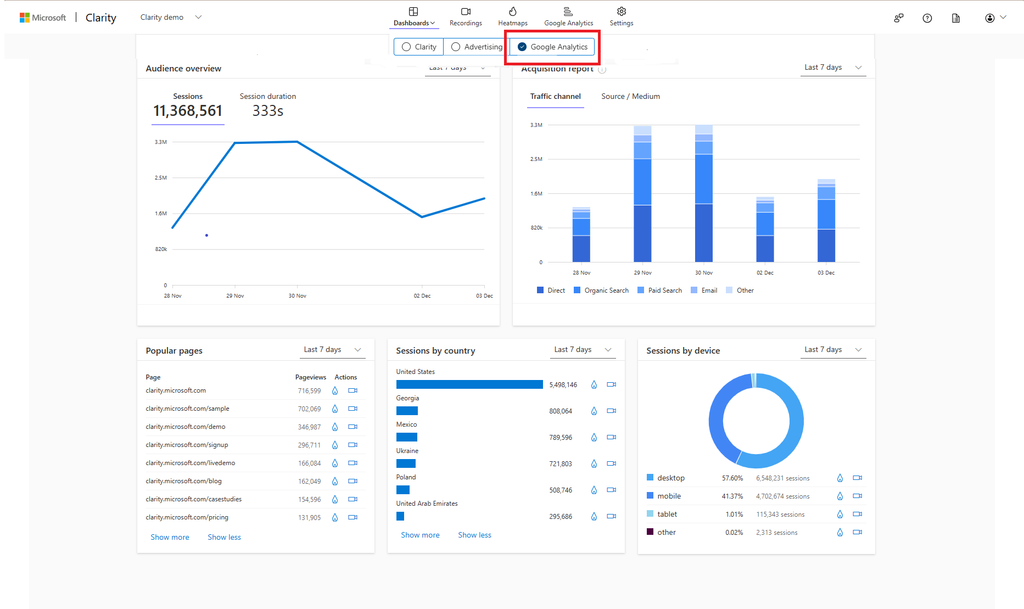
Google Analytics 4 (GA4) is one of the most important digital marketing tools in 2026. It helps businesses understand how visitors interact with their websites and mobile applications.
With GA4, marketers can track website visitors, page views, traffic sources, user engagement, conversions, and customer behaviour. It also helps businesses identify which marketing campaigns are bringing the most valuable traffic.
Key Features:
- Tracks website and app traffic.
- Measures user engagement and conversions.
- Provides insights into customer behaviour.
- Helps evaluate marketing campaign performance.
- Supports data-driven marketing decisions.
Benefits: GA4 helps businesses understand what is working and what needs improvement. It is especially useful for companies that want to increase website traffic, generate leads, and improve conversion rates.
Website: https://analytics.google.com/
2. Google Search Console
Best for: Search engine optimization (SEO)
Google Search Console is a free tool that helps website owners monitor and improve their website’s presence in Google Search results.
SEO is essential for businesses that want to attract organic traffic without depending entirely on paid advertisements. Google Search Console provides useful information about how people discover your website through search engines.
Key Features:
- Monitors website search performance.
- Shows clicks, impressions, and average search position.
- Identifies indexing and technical issues.
- Helps monitor keyword performance.
- Provides information about website usability and search visibility.
Benefits: This tool allows digital marketers to identify opportunities to improve website rankings, fix indexing problems, and attract more organic visitors.
Website: https://search.google.com/search-console/
3. Semrush
Best for: Advanced SEO and competitor research
Semrush vs Similarweb 2026: Which SEO Tool Reigns Supreme?
Semrush is a popular all-in-one digital marketing platform that helps businesses improve their online visibility. It is particularly useful for SEO professionals, agencies, bloggers, and businesses that want to understand their competitors.
The platform offers tools for keyword research, backlink analysis, competitor analysis, website audits, and content marketing.
Key Features:
- Keyword research and analysis.
- Competitor website analysis.
- Backlink monitoring.
- Website SEO audits.
- Content optimization suggestions.
- Advertising and online visibility research.
Benefits: Semrush helps businesses develop effective SEO strategies and identify keywords that can bring relevant traffic to their websites. It also helps marketers understand competitor strategies and discover new growth opportunities.
Website: https://www.semrush.com/
4. ChatGPT
Best for: AI-powered content creation and marketing ideas
I Used AI to Create a Marketing Plan 2 Ways — Here’s How You Can Too
Artificial intelligence has transformed digital marketing, and ChatGPT is one of the most useful AI tools available in 2026. It helps marketers generate ideas, create content, research topics, and improve their marketing strategies.
Digital marketers can use ChatGPT to prepare blog posts, social media captions, email drafts, website descriptions, advertising copy, and content calendars.
Key Features:
- Generates blog and website content.
- Creates social media captions.
- Helps develop marketing strategies.
- Supports brainstorming and keyword-related ideas.
- Assists with email and advertisement copy.
- Helps rewrite and improve existing content.
Benefits: ChatGPT saves time and helps marketing teams become more productive. However, AI-generated content should always be reviewed, fact-checked, and edited to maintain accuracy, originality, and brand quality.
Website: https://chatgpt.com/
5. Canva
Best for: Graphic design and visual content creation
Animated Presentation Maker: Design Custom Decks | Canva
Canva is one of the easiest design tools for digital marketers. It allows users to create professional-looking graphics without requiring advanced graphic design skills.
Visual content plays an important role in attracting audiences on platforms such as Instagram, Facebook, LinkedIn, and Pinterest.
Canva provides ready-made templates and design features that make content creation simple and efficient.
Key Features:
- Social media post designs.
- Logo and banner creation.
- Presentation templates.
- Video and promotional designs.
- Ready-made marketing templates.
- AI-assisted design features.
Benefits: Canva helps businesses create attractive marketing materials, maintain brand consistency, and save money on basic design requirements.
Website: https://www.canva.com/
6. HubSpot
Best for: Customer relationship management (CRM)
HubSpot is a powerful CRM and marketing platform that helps businesses manage customer relationships, leads, sales activities, and marketing campaigns.
For businesses that receive enquiries through websites, social media, and advertisements, managing leads properly is essential. HubSpot makes it easier to organize customer information and follow up with potential customers.
Key Features:
- Contact and lead management.
- Email marketing tools.
- Marketing automation.
- Sales pipeline management.
- Customer activity tracking.
- Marketing performance reporting.
Benefits: HubSpot helps businesses improve customer communication, manage leads more effectively, and build stronger relationships with customers. It is particularly useful for growing companies and marketing agencies.
Website: https://www.hubspot.com/
7. Mailchimp
Best for: Email marketing campaigns
Why have Mailchimp email open rates dropped and gone to spam in Gmail recently? – Suped
Mailchimp is a widely used email marketing platform that helps businesses connect with customers through personalized email campaigns.
Email marketing remains an effective way to promote products, share updates, announce offers, and maintain relationships with existing customers.
Mailchimp makes it easier to create professional emails and automate communication with subscribers.
Key Features:
- Email campaign creation.
- Ready-made email templates.
- Audience segmentation.
- Automated email workflows.
- Campaign performance reports.
- Customer engagement tracking.
Benefits: Mailchimp helps businesses communicate directly with their audiences, increase customer engagement, and encourage repeat purchases.
Website: https://mailchimp.com/
8. Buffer
Best for: Social media scheduling and management
Buffer: Social media management for everyone
Buffer is a social media management platform that helps businesses plan, schedule, publish, and analyze their social media content.
Managing multiple social media accounts can be time-consuming. Buffer simplifies this process by allowing marketers to organize their content and schedule posts in advance.
Key Features:
- Social media post scheduling.
- Content calendar management.
- Social media analytics.
- Multi-platform publishing.
- Engagement management.
- Content planning.
Benefits: Buffer helps businesses maintain a consistent social media presence and save time. It is especially useful for freelancers, small businesses, and digital marketing agencies managing multiple accounts.
Website: https://buffer.com/
9. Google Ads
Best for: Paid advertising and lead generation
The 10 Best PPC Tools in 2025: Free and Paid | Brafton
Google Ads is one of the leading online advertising platforms. It allows businesses to promote their products and services across Google Search, YouTube, and other advertising placements.
Unlike organic SEO, paid advertising can help businesses reach potential customers through targeted campaigns when they are actively searching for particular products or services.
Key Features:
- Search advertising campaigns.
- Display advertising.
- YouTube video advertising.
- Keyword targeting.
- Audience targeting.
- Conversion tracking and reporting.
Benefits: Google Ads helps businesses increase brand visibility, generate leads, attract website visitors, and promote products or services to relevant audiences.
However, successful campaigns require proper keyword selection, budget management, ad optimization, and regular performance monitoring.
Website: https://ads.google.com/
10. Zapier
Best for: Marketing automation and workflow integration
Zapier vs. IFTTT: The Best Tool for Task Automation | TechnologyAdvice
Zapier is an automation platform that connects different applications and helps businesses automate repetitive tasks without requiring advanced coding knowledge.
For example, businesses can create automated workflows to send new website leads to a CRM, notify their sales teams, or organize customer information in spreadsheets.
Key Features:
- Connects different marketing applications.
- Automates repetitive tasks.
- Creates multi-step workflows.
- Supports lead management automation.
- Integrates with CRM and email platforms.
- Helps reduce manual work.
Benefits: Zapier saves time, reduces repetitive work, and improves business productivity. It is useful for businesses that want to connect their marketing tools and create smoother workflows.
Website: https://zapier.com/
How to Choose the Right Digital Marketing Tools in 2026
Selecting the right tools is important for achieving better marketing results. Every business has different marketing goals, budgets, and requirements. Before investing in any digital marketing software, consider the following factors:
- Understand your business goals: Decide whether you want more website traffic, leads, sales, or brand awareness.
- Consider your budget: Start with free tools and upgrade when your business needs advanced features.
- Check ease of use: Choose tools that your marketing team can use comfortably.
- Look for integration options: Select platforms that can connect with your existing marketing software.
- Measure performance: Use analytics and reporting features to understand whether your marketing activities are delivering results.
- Consider AI and automation: Choose tools that reduce repetitive work and improve productivity.
Benefits of Using Digital Marketing Tools
Digital marketing tools offer several advantages for businesses in 2026.
- Time-saving: Automation helps complete repetitive marketing tasks faster.
- Better decision-making: Analytics provide useful information about customer behaviour and campaign performance.
- Improved online visibility: SEO tools help businesses improve their search engine presence.
- Increased productivity: Content creation and social media management tools simplify daily marketing activities.
- Better customer relationships: CRM and email marketing tools help businesses communicate with customers.
- Higher marketing efficiency: Businesses can track results and optimize campaigns according to performance.
Conclusion
Digital marketing tools have become essential for businesses that want to grow in the competitive online marketplace. In 2026, the right combination of SEO, analytics, AI, social media, email marketing, and automation tools can make marketing activities more effective and productive.
Tools like Google Analytics 4 and Google Search Console help monitor website performance, while Semrush supports SEO research. ChatGPT and Canva make content creation easier, HubSpot helps manage customers, and Mailchimp supports email marketing. Buffer simplifies social media management, Google Ads helps businesses reach potential customers, and Zapier automates repetitive workflows.
However, businesses do not need to use every tool available. The best approach is to select tools according to business requirements, marketing objectives, and budget.
Remember: Digital marketing success is not just about using advanced tools. It is about combining the right technology with a clear strategy, valuable content, creativity, and consistent performance analysis.
Frequently Asked Questions (FAQs)
1. Which is the best digital marketing tool in 2026?
There is no single best tool for every business. Google Analytics 4 is excellent for website analytics, Semrush is useful for SEO, Canva is ideal for graphic design, and HubSpot is a strong option for CRM and marketing management.
2. Which digital marketing tools are free?
Google Analytics 4, Google Search Console, and Canva offer free options. ChatGPT, HubSpot, Mailchimp, and Buffer also provide free access or limited free plans, depending on their current terms.
3. Which tool is best for SEO?
Semrush is a popular option for keyword research, competitor analysis, and website audits. Google Search Console is also essential for monitoring organic search performance.
4. Which tool is best for social media marketing?
Buffer is a useful option for scheduling and managing social media posts. Canva is also helpful for creating attractive social media graphics.
5. Are digital marketing tools useful for small businesses?
Yes. They help small businesses manage marketing activities, understand customers, improve online visibility, and save time without requiring a large marketing team.
6. How many digital marketing tools should a beginner use?
Beginners can start with four or five tools covering analytics, SEO, content creation, and social media management. They can add more tools as their marketing requirements grow.
Final Thoughts for Businesses
The best digital marketing strategy in 2026 combines technology, creativity, and data. Start with the tools that solve your biggest marketing challenges, track your progress, and gradually build a marketing system that supports long-term business growth.
Suggested SEO keywords: Best digital marketing tools 2026, digital marketing software, SEO tools, social media marketing tools, AI marketing tools, email marketing tools, online marketing tools, digital marketing for businesses.
Research references: The tool selection and categories are informed by current 2026 industry guides from Sprout Social, SEO.com, and Search Engine Land.